Profits Decline At Radisson Blu Royal Hotel Parent Company

New accounts filed by Luxor Leisure, which operates the Radisson Blu Royal Hotel on Dublin’s Golden Lane, have revealed that the firm’s pre-tax profits decreased by 32% to €1.15 million during the year that ended on October 31, 2019.

Meanwhile, the company’s revenues decreased by 4% to €12.3 million; its post-tax profit amounted to €1 million; the number of people employed by the Radisson Blu Royal Hotel remained static at 150; and staff costs increased from €3 million to €3.37 million.

Additionally, Luxor Leisure’s cash funds decreased from €4.8 million to €2.8 million and its shareholder funds amounted to €8.17 million at the end of last October, as reported by The Irish Independent.

View the original article by Dave Simpson on Hospitality Ireland.

Finalists for The Young National Chef of the Year revealed

The Craft Guild of Chefs has revealed ten talented young chefs who have been selected to compete in the prestigious Young National Chef of the Year final this autumn.

Due to the ongoing situation with Covid19, the selection process has had to be tweaked for this year. Rather than some of the chefs gaining a top ten spot through a semi-final, head judge, Hrishikesh Desai and organiser of the competition, David Mulcahy have handpicked the finalists based on recommendations from industry experts. The final decision on the line-up has come from extensive research and guidance from other leading chef competitions or industry associations.

The criteria for the final will be announced at the end of June to give the finalists plenty of time to work hard in preparing for the competition, with the support of the wider industry. All finalists will be invited to an online webinar to chat to David and Hrishikesh about the competition and also to connect with each other.

The ten finalists are: –

  • Nathan Lane, chef de partie, The Greenhouse, Dublin
  • Charlie Crote, junior sous chef, Allegra
  • Ieuan Andrew Davies, chef de partie, Manor House
  • Dervis Mustafa, demi chef de partie, Petrus
  • Jamaar Semper-House, junior sous chef, Lucknam Park Hotel (Restaurant Hywel Jones)
  • Harry Paynter-Roberts, commis chef, Moor Hall Restaurant with Rooms
  • Rebecca Mary Jackson, junior sous chef, Leila Lily’s
  • Eden Allsworth, demi chef de partie, Cliveden Hotel
  • Sagar Massey, sous chef, Mar Hall Hotel, Golf & Spa Resort
  • Jacob Gosselin, demi chef, Longueville Manor Hotel and Restaurant

David Mulcahy, organiser of YNCOTY and Vice-President of the Craft Guild of Chefs said: “When we began planning the campaign to find our next winner we could never have predicted the situation we’d find ourselves in. However, one thing has remained the same throughout this crisis and that’s our determination to ensure that this competition goes ahead. We have been listening to the Government guidance throughout and safety remains our top priority whilst giving the industry reasons to celebrate. The Craft Guild of Chefs has been determined to support the young chef community throughout this crisis. By personally inviting each finalist to get involved we know we have an incredible list of chefs lined-up. The brief will be fully revealed at the end of June, but it will have particular focus on sustainability as we team up with headline sponsor, Knorr Professional, and celebrate its inspiring Future 50 initiative.”

Chair of Judges for YNCOTY, Hrishikesh Desai added: “Just looking at this list of chefs I know it’s going to be an exciting final. I’ll be challenging the young chefs to be creative and making sure that excellence still prevails this year, regardless of the changes to the format. The criteria will be engaging with the spotlight on produce, sustainability and skills. After a difficult 2020, I can’t wait to bring our judges together for a unique and memorable final.”

The cook-off will take place on Monday 7th September 2020 at Le Cordon Bleu, but the final will be aired as part of the new and exciting “Hospitality Unites” week on Tuesday 29th September. Chefs and supporters will be able to find out the winner on Wednesday 30th September with a live online announcement following the coverage of the National Chef of the Year competition.

View the original article by Mathilde Macé on hotelandcateringreview.ie/.

Jurys Announces Five Point Health And Safety Plan For Its Hotels

Jurys has announced a five-point plan to help protect the health of guests and staff when it reopens its hotels.

The group, which operates 48 hotels across Ireland and the UK under the Jurys and Leonardo brands, intends to reopen its four hotels in the Republic of Ireland on July 20. The rest of its properties will reopen on a phased basis based on guidance from health authorities and the UK government.

The group’s five point health and safety plan involves increased cleaning and checks of shared spaces and bedrooms, social distancing measures, online check-in, cashless payments, and alterations to food and drinks services, including leaving room service orders outside room doors, providing disposable cups for tea and coffee, and making menus available exclusively online.

Ensuring Guests And Staff Feel Safe

The Irish Times quotes managing director of Jurys Inn and Leonardo Hotels UK and Ireland Jason Carruthers as saying, “We wanted above all to make sure that customers feel confident about staying at our hotels and feel safe doing so. Equally importantly, we wanted to make sure our employees feel the same.”

Carruthers stated that the group is following World Health Organization guidance on health and safety measures, and that it will initially allocate lower floor rooms to guests to ensure that lifts are only used by those who need them most.

Additionally, while face masks will be optional for guests, they will be mandatory for employees who works in areas where social distancing cannot be guaranteed, such as kitchens.

View the original article by Dave Simpson on Hospitality Ireland.

IHF Says 87% Of Hotels Preparing To Reopen; Calls For Action On Tourism

Almost nine in 10 hoteliers across the country are readying themselves to reopen for guests by mid-July, according to an industry survey undertaken by the Irish Hotels Federation (IHF).

The survey of over 300 hoteliers was taken following the government’s decision to bring forward the reopening date of hotels to June 29 and the publication of operational guidelines by Fáilte Ireland.

IHF CEO Tim Fenn stated, “It is really encouraging to see that 87% of hotels now intend to reopen by mid-July. We face a serious challenge however in terms of making up ground due to lost overseas business as highlighted by our survey. For the peak summer month of August, members project an average occupancy of 38% this year compared with an average occupancy of 90% for the same month last year – representing an enormous drop in projected business levels. Irish tourism’s heavy dependence on overseas markets and tour groups means there is plenty of availability for those hoping to enjoy a break in an Irish hotel or guesthouse this summer.”

Desired Supports
The hoteliers who took part in the survey cited the wage subsidy scheme and a reduced tourism VAT rate as the two most important supports necessary for the sector.

Fenn said, “The findings demonstrate the critical importance of government support for the hotels sector in order to ensure the survival and long-term financial stability of tourism businesses.

“Further action is required by government to put in place sector specific supports for the tourism sector to aid the recovery. The Temporary Wage Subsidy Scheme is helping businesses to keep their teams together during these financially challenging times. It should be continued for as long as the impact of COVID-19 restrictions remain, and it should be extended to cover seasonal employees.

“Reducing the tourism VAT rate on a permanent basis would assist recovery and secure a viable and sustainable future for tourism. International competitiveness is an urgent issue for Irish tourism with hotel VAT now higher than 28 European countries we compete with.”

Additionally, the IHF stated that while it welcomes the incoming government’s recognition of the challenges facing tourism in the programme for government together with its commitment to place tourism at the centre of its National Economic Plan, it is calling on the government to recognise equally the urgent requirement for immediate measures to help businesses survive.

Fenn asserted that a failure to act now could be particularly devastating for regional Ireland given that 70% of tourism employment is located outside of Dublin.

The CEO said, “Tourism businesses, including hotels, are facing a fall of 70% in revenue this year due to the collapse in the overseas visitors. The establishment of the Tourism Recovery Taskforce is a very welcome first step. But, in addition to its work, immediate interventions in relation to liquidity and competitiveness are also required to support tourism businesses throughout the length and breadth of Ireland.

“Hotels and guesthouses not only provide local employment opportunities, they buy local services, source locally-produced food and provide a vital infrastructure in support of local business and communities, so the ramifications will be felt far and wide.

“One of the lessons learnt from the financial crisis was the requirement to act extremely quickly to avoid long-term consequences.”

Proposed Measures
The IHF is calling on the incoming government to implement the following measures as a matter of urgency:

  • a significant widening of the direct business grant scheme;
  • 0% interest on government guaranteed finance;
  • a government supported scheme for deferral of capital and interest payments for a period of one year;
  • reassessment of the SBCI loan system to ensure appropriate products are available for tourism and hospitality;
  • continuation of the job subsidy scheme for tourism and hospitality during the crisis, with the inclusion of seasonal employees not currently eligible for the scheme;
  • reduction in tourism VAT on a permanent basis to assist recovery and secure a viable and sustainable future for tourism;
  • an extension of the three-month waiver period for local authority rates and charges to coincide with business interruption due to the COVID-19 crisis and for a minimum of 12 months, and the basing of payment of local authority rates on reduced levels of activity due to the COVID-19 crisis thereafter.

View the original article by Dave Simpson on Hospitality Ireland.

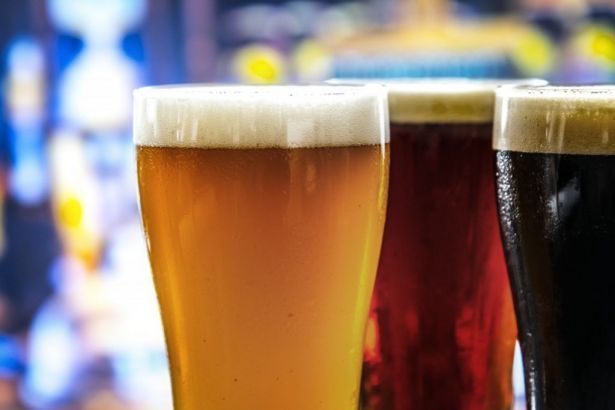
Photo by Christopher Jolly on Unsplash

ROI Hotel Occupancy Rate Dropped To 12.6% In April

According to travel research firm STR, the occupancy rate for the handful of hotels that were open in the Republic of Ireland in April was 12.6%.

STR data has revealed that the hotel occupancy rate in Dublin decreased 85% last month from the figure for April of 2019 to 16.2% due to the COVID-19 crisis while occupancy in regional Ireland decreased by 80%, as reported by The Irish Times.

RevPAR

Meanwhile, revenue per available room (RevPAR) declined 90% in Dublin last month from the figure for April of last year to €11.54, and the average daily room rate in the capital dropped over 30% from the figure for April of 2019 to €91.83. In regional Ireland, RevPAR decreased 86% last month from April of 2019 to €13.47 while the average daily room rate declined 31% to €83.28.

“An Exceptionally Difficult Period”

The Irish Times quotes Goodbody Stockbrokers as saying, “April was always going to be an exceptionally difficult period for Irish hotels given that they are only allowed to accept bookings for essential workers and the majority of hotels are closed.”

View the original article by Dave Simpson on Hospitality Ireland.

Permission Being Sought To Open Island Of Ireland’s First Floating Hotel

Seamus Carey, the owner of the Crannagh Marina Complex in Coleraine, Co. Derry, has applied for planning permission to open the island of Ireland’s first floating hotel.

If he is given the green light to open the proposed hotel, Carey will transport a 70 metre long barge from Norway to Coleraine for an eight-week refurbishment that will transform it into a 36-cabin, three-star floating accommodation venue. Carey hopes to have the hotel up and running by the summer of 2021, and intends to employ approximately 50 people at the venue.

“Enhance Our Offering”

The Irish Times quotes Carey as saying, “We believe the floating hotel will enhance our offering and enable visitors to stay and enjoy not only the facilities at the Crannagh, but all the wonderful offerings of the north coast.”

View the original article by Dave Simpson on Hospitality Ireland.

Flipdish Extends Food Ordering Service To Include Hotels

Dublin-based digital food ordering solution for independent eateries Flipdish has announced that it has extended its services to include hotel kitchens in Ireland to assist in setting up hotel restaurants for online orders and deliveries during the COVID-19 crisis.

“A Huge Difference”

Among the first hotels that have signed up for Flipdish’s services is Scholars Townhouse Hotel of Drogheda, Co. Louth, the owner of which, Mark McGowan, stated, “When we started offering the takeaway service, there was only one other eatery in the area offering takeaway at the time, so we didn’t know how people would respond. Fortunately, people are really enjoying the option of being able to ‘eat out, but eat in’ that ordering from us is affording them, and it’s great to have that community support.

“Flipdish helped us get up and running almost immediately, so we were able to get our business back up and running as quickly as possible, which has made a huge difference for us.”

Flipdish is also working with several other hotels around Ireland, including Co. Kerry’s Killarney Plaza Hotel.

“Adapt And Change”

Flipdish CEO Conor McCarthy commented, “The current situation is forcing near-term and mid-term change to both consumer behaviour and restaurant operations. We are beginning to see how willing the traditional dine-in sector is  to adapt and change how the business is run, which might be the difference between survival and failure of the larger hotels and their ability to keep staff employed.”

View the original article by Dave Simpson on Hospitality Ireland.

Publican Charlie Chawke Intends To Reopen Seven Venues In June

Despite the rule that Irish pubs have to wait until August to reopen, publican Charlie Chawke has said that he intends to reopen seven of his nine premises in June because said premises have restaurant licences.

The Business Post quotes Chawke as saying, “We are restaurants and have restaurant licences. But I’ll abide by the same regulations as anyone else.

“Staff will wear masks and there will be screening and temperature gauges at the entrance and staff will be tested.

“Every half hour they will need to wash their hands and replace gloves.”

The seven premises that Chawke intends to reopen in June are The Old Orchard Inn, The Goat, Searson’s, The Bank, The Dropping Well and The Lord Lucan, all of which are in the Dublin area, and Aunty Lena’s in Co. Limerick.

“Costly”

Chawke has also called for a VAT break for pubs and restaurants to help keep them in business while operating with reduced customer capacity, saying, “It would be great if we get a holiday from the VAT”, and that banks “will have to step up to the plate” as well.

Chawke added, “We don’t know how we’re going to do from June 29. We’ll spread out our tables and have capacity for 30% to 40% of our [former] business. That is what we are hoping for, but there is no guarantee.

“People will have to trust us. We’ll be complying with the regulations and looking after our staff and our customers.

“It’s going to be costly. Really, it’s to give a service rather than to make a lot of money, and to get people back to work and get back to a bit of normality.”

View the original article by Dave Simpson on Hospitality Ireland.

RAI Urges Government To ‘Force Landlords To Slash Rent’ During COVID-19 Crisis

The Restaurants Association of Ireland (RAI) has urged the government to “take decisive action and force landlords to slash rent” during the COVID-19 crisis, with the association’s CEO saying that landlords “need to take some pain” if the hospitality industry is to survive.

The RAI’s assertions came in response to the news that the decision has been made to permanently close Bewley’s café on Dublin’s Grafton Street.

“A Wake-Up Call To The Government”

The Irish Independent quotes RAI CEO Adrian Cummins as saying, “You are going to have a domino fall of businesses that can’t pay their rent, that won’t be able to open, and I can’t see 90% of restaurants opening up on June 29 unless drastic action is taken.

“This has to be a wake-up call to the government that if a company in hospitality like Bewley’s can fall, what is going to happen in the future for smaller businesses who are having huge difficulty with landlords with no light at the end of the tunnel?

“Landlords are issuing 21-day notices and putting severe pressure on highly stressed businesses, and landlords are pushing for rent to be paid when businesses can’t afford it.”

View the original article by Dave Simpson on Hospitality Ireland.

IHF Calls For Retention Of Temporary Wage Subsidy Scheme

The Irish Hotels Federation (IHF) has called on the government to retain the Temporary COVID-19 Wage Subsidy Scheme (TWSS) that is currently scheduled to conclude in mid-June, which is before many businesses, including hotels, can reopen.

IHF president Elaina Fitzgerald Kane said that while the current employment supports are very welcome, they must be retained until the government restrictions on physical distancing and mass gathering are lifted.

Fitzgerald Kane made the above statement in response to the publication of the latest TWSS figures by the Department of Employment Affairs and Social Protection. At present, 90% of hotels across the country are closed while the majority of the 260,000 people employed in tourism and hospitality prior to the crisis are currently laid off.

“Vital”

Fitzgerald Kane stated, “Employment supports are vital for the road to recovery for businesses including those in tourism and hospitality, which have been devastated by the COVID-19 crisis. Tourism can play a strong role in Ireland’s economic recovery, but it requires support to do so, including employment initiatives such as the Temporary COVID-19 Wage Subsidy Scheme.  However, its continuation must be aligned with the recovery of the tourism sector to have a meaningful impact on the preservation of employment levels across the industry.

“This is the greatest health crisis in living memory and we appreciate that significant resources are being committed to address the overriding issue of public health. However, the health and well-being of all citizens is intertwined with the economy, and people will need livelihoods after the crisis is over, including the 260,000 people working in tourism and hospitality.”


View the orginal article by Dave Simpson on Hospitality Ireland.

We use cookies in order to give you the best possible experience on our website. By continuing to use this site, you agree to our use of cookies.
Accept
Reject