Knightsbrook Hotel On The Market For €25m

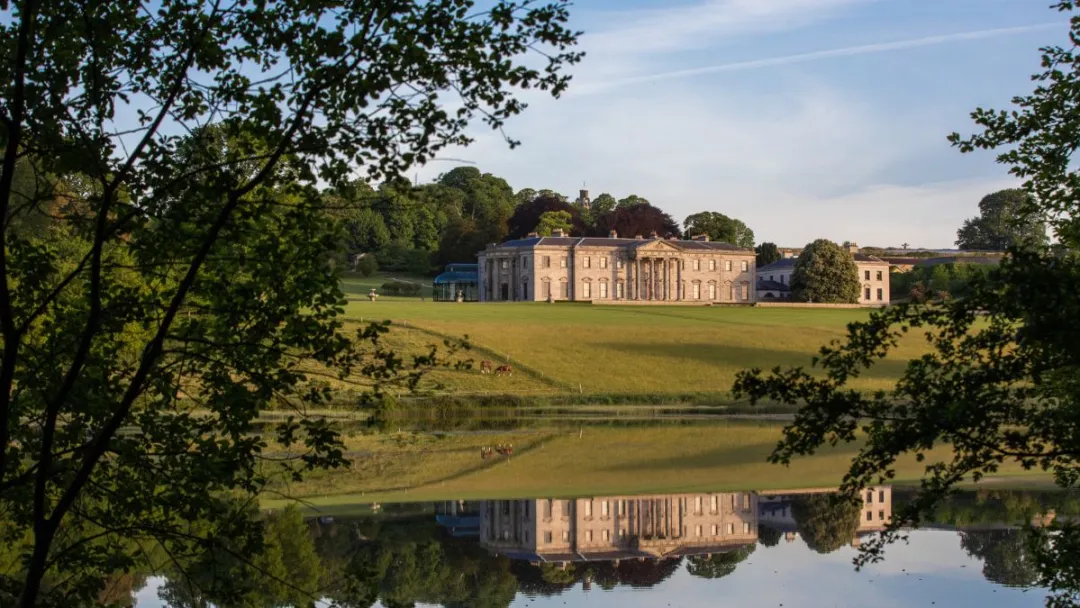
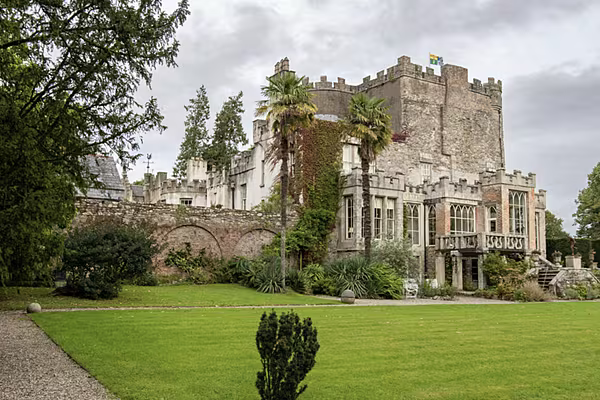
Savills and JLL have announced the sale of the Knightsbrook Hotel, Spa and Golf Resort, a premier four-star hotel located in Trim, Co. Meath.

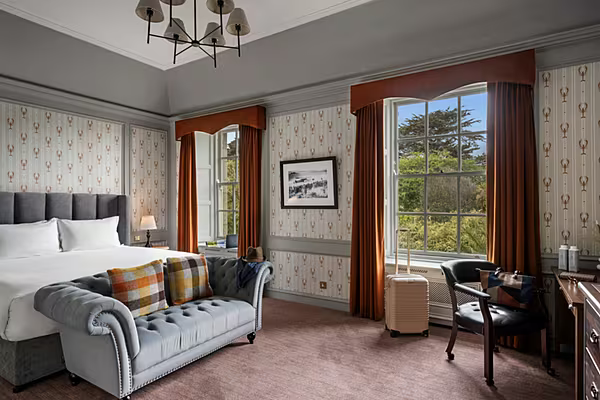
The award-winning resort features 131 guest bedrooms and 28 three-bedroom self-catering holiday homes.

Savills claims that the sale offers an opportunity to unlock significant value by optimising the existing hotel, resort houses, spa, and golf and events infrastructure while exploring branding and operational efficiencies across the resort’s large accommodation and amenity base.

‘Standout Investment Opportunity’

“Knightsbrook has the potential to be one of Ireland’s leading resort hotels, combining extensive facilities with a prime location close to Dublin and the airport,” said Tom Barrett, director of hotels and leisure at Savills.

“Its scale and upside potential make it a standout investment opportunity in the Irish hospitality market.”


The resort features a strong food and beverage offering, including Rococo Restaurant, Swifts Bar, Terrace Lounge, and Rooftop Terrace, alongside large‑scale conference and banqueting facilities with capacity for up to 1,800 delegates, enhancing its appeal as an events destination in close proximity to Dublin.

Knightsbrook boasts the award-winning River Spa, with 14 treatment rooms and a health club that includes an 18m swimming pool, rejuvenating thermal suite, gym, and two dedicated fitness studios.

‘Rare Resort Property’

Set across a total of 172 acres of rolling parkland, the resort features a championship 18-hole golf course designed by Christy O’Connor Jnr, along with a dedicated golf clubhouse complete with a meeting suite and pro shop.

“The Knightsbrook is a large-scale Irish resort offering a variety of sought-after facilities, including leisure, spa, golf and holiday homes,” said Daniel O’Connor, head of hotels and living at JLL.

“With significant performance growth potential remaining, we are expecting very strong national and international buyer interest in this quality and rare resort property.”

AI In Hospitality? It’s All About Context

Author: Tom Hipwell, VP of Engineering at Nory

Everyone is talking about AI, and the hospitality industry is no exception.

Large Language Models (LLMs) and other forms of AI, we’re told, are going to revolutionise everything from ordering and scheduling, to forecasting and delivering.

But as someone who has spent a lot of time over the past decade building and thinking about how these technologies fit into the complex, fast-paced, frenetic world of a restaurant, I’ve come to a realisation: Simply applying general-purpose AI is not enough.

The real challenge in hospitality isn’t just about generating reams of text or crunching page after page of numbers; it’s about understanding the industry context.


And what is that context? It’s one we all know – that the industry is a web of interconnected variables where a change in one area – a sporting event, for example – can send ripples through everything from revenue forecasts and inventory management, to hourly staff scheduling.

Imagine if every job in your restaurant was done by a different person, and none of them communicated with one another.

Your waiters don’t talk to the bartender. The head chef and sous chef operate in silence. The maître d’ doesn’t even look at the general manager.

It sounds absurd, but it mirrors the state of many hospitality tech stacks today. Your POS doesn’t talk to your labour management system. Your inventory platform has never met your labour management tool. You’re running six different log-ins just to understand if yesterday was profitable.

It’s not a recipe for a successful business of any kind, let alone one in hospitality.


And it’s about more than simple inefficiency; it’s a matter of survival. Rising labour costs, high energy rates, less spending on dining, and numerous other pressures mean you’re already battling for every single percentage point of your margins.

In this context, I would argue that we need to be talking about AI less as a general, all-purpose blunt object, but as a precise, specialised, finely tuned tool.

Where general-purpose AI Doesn’t Work

An LLM, the technology behind tools like ChatGPT, is a brilliant communicator. It can summarise a complex document or explain a tricky concept pretty well.

But ask it to build a precise rota for 200 restaurant locations, taking into account staff holidays, local regulations, prep-time requirements, while also optimising for efficiency metrics like sales per labour hour (SPLH), and you’ll quickly see its limitations.

General, all-purpose AI doesn’t have the granular, specialised precision that modern hospitality businesses need. For me, that’s a system with a truly precise understanding of how a restaurant functions across all its sites. It’s a system that understands how everything in a hospitality business is connected, from kitchen prep sheets, to front of house workflow, to compliance, and everything in-between.


Integrating and analysing these complex, interconnected dynamics and operational dependencies is what can unlock the power to drive margin improvements. That’s the belief that drove our thinking at Nory: The way to achieve effective specialisation lies in combining three core technologies that work together: LLMs, Machine Learning (ML) algorithms, and the specialised agents that put them into action.

What We Mean By AI

Let’s talk about the terms we use when we talk about AI. And then let’s look at how that ties into the way we can think about an AI operating system.

An algorithm is like a recipe to get something done. It’s the precision engine. The distinction with AI is in how that recipe is developed.

Instead of following a set of well-defined, predetermined steps, ML algorithms learn and refine the optimal recipe themselves, by analysing training data (like sales patterns, prep times, and compliance rules) to generate the most optimal outcome.

LLMs serve as the communicators. They are essential for explaining the complex output of the ML algorithm, allowing a manager to chat with the model and turn dense data into conversational, accessible insights.


The AI agent is the functional layer, the executor. An agent takes the precise decision, acts like a dynamic supervisor to plan steps and complete more complex tasks across the entire operating system.

Let’s Talk About Agents

When we’re talking about restaurants, AI agents are the true executors. An agent isn’t just a trigger; it’s an AI that can actually understand a goal, create a plan to get there, and then successfully execute that plan.

Traditionally, automation was rigid, with every step specified: If this, then that.

But in the new world, agents navigate that operational complexity for you. That’s more than just doing the first step; that’s managing the whole process to achieve a specific outcome.

Picture it: It’s Thursday afternoon. Your general manager at one site just texted; they’re down two servers for Saturday night and there’s a big local match on. That’s an hour of phone calls, checking availability, and worrying about overtime rules.

In the new world, your forecast already shows an increased expected sales volume, automatically reviews the staff pool, considers holidays and regulations, identifies the optimal coverage from available staff, secures confirmation, and updates the live schedule. It takes seconds. And the manager is only needed to rubber stamp the result.

It’s only possible when all your data and tools are brought together in one unified environment, what we call an AI Operating System (AI OS).

The Power Of An AI Operating System

The power of this unified approach lies in continuous, cross-functional feedback loops. In an AI OS, every operational step, from sales forecasting to rota planning and stock ordering, is viewed not as a standalone item, but as part of a single, interconnected profitability loop.

Every decision affects your margin. But when your systems actually talk to one another, these problems solve themselves. The operating system delivers genuine business resilience and has an effect on your margins because every stage of the loop feeds the next one.

Better forecasts mean more efficient labour scheduling or more accurate demand-based ordering. And having a single forecast that connects all of these dots is even more powerful. You review one forecast, tweak it with your specialist on-the-ground knowledge, and everything that depends upon that model also updates its expectations.

For too long, hospitality operators have been battling against the clock, manually connecting the dots between disjointed systems. A specialised, context-aware AI OS offers the control and visibility needed to streamline operations and unlock margin improvements. It allows operators to step back from the constant operational firefighting and focus on what they do best: Serving their customers.

And it’s why, at Nory, we’ve built that single, unified operating system to work with your existing tech stack, generate those unique margin-boosting insights about your business, and automatically action them for you, so you can focus on what you do best: Serving your customers.

Ready to see what the power of an AI operating system can do for your business?

Inbound Tourism Numbers for March 2026 up by 16% on 2025 – CSO

The Central Statistics Office (CSO) has published Inbound Tourism figures for March 2026.

The Central Statistics Office (CSO) has today (30 March 2026) published Inbound Tourism March 2026.
The Inbound Tourism release is published every month and provides unique and timely insights on visitor trips to Ireland.

Inbound Tourism March 2026 – Key Findings

  • Some 510,100 foreign visitors completed a trip to Ireland in March 2026, an increase of 16% when compared with March 2025 and down 2% on March 2024.
  • Foreign visitors who departed Ireland in March 2026 stayed a total of 3.2 million nights in the country, up 14% on March 2025 and up 4% on March 2024.
  • Visitors from Great Britain accounted for the largest share at (40%), compared with Continental Europe (35%), North America (21%), and the Rest of the World (3%).
  • In March 2026, 43% of overnight foreign visitors indicated that the main purpose of their trip was for Holidays, Leisure & Recreation, 34% said it was for visiting Friends & Relatives, and 15% of trips were for Business reasons.
  • The average length of stay for foreign resident overnight visitors was 6.4 nights, down from 6.5 nights in March 2025.
  • Expenditure by foreign visitors in March 2026 was estimated at €372 million, up 14% compared with March 2025 (€326 million), and down 11% compared with March 2024 (€417 million).

Commenting on the release, Edward Duffy, Statistician in the Tourism and Travel Division, said:

“The results show that more than 510,000 foreign resident visitors completed a trip to Ireland in March 2026, an increase of 16% compared with March 2025 and a fall of 2% compared with March 2024. The number of nights spent in Ireland by foreign visitors in March was just over 3.2 million nights, up 14% when compared with March 2025 and up 4% compared with March 2024. 

In March 2026, the greatest number of visitors came from Great Britain (40%), followed by Continental Europe (35%), North America (21%), and the Rest of the World (3%). Visitor numbers rose in March 2026 when compared with March 2025: Great Britain (+17%), Continental Europe (+14%), North America (+17%), and visitors from the Rest of the World (+13%). 

The visitors’ expenditure in Ireland (excluding fares) was €372 million in March 2026. Visitors from Continental Europe accounted for €132 million (35%), North America for €117 million (31%), Great Britain for €101 million (27%) and visitors from the Rest of the World for €22 million (6%). Taken together, this represented an increase of 14% when compared with March 2025, and a decrease of 11% when compared with March 2024.

The leading purpose for travel to Ireland in March 2026 was for Holidays, Leisure & Recreation (43%), followed by Visiting Friends & Relatives (34%), and Business trips (15%).”

Read the full report HERE

Retail insolvencies up, hospitality down ahead of VAT cut

There were 213 corporate insolvency appointments in the first three months of the year, according to analysis by Deloitte, a 3% rise compared to the same period last year.

Deloitte said early indications suggest retail sector insolvencies are up totalling 30, or 14% of insolvencies.

While hospitality insolvencies were down by 27% ahead of the scheduled VAT rate cut to 9% in July.

However the report said the hospitality sector is expected to continue to experience a high proportion of insolvencies for the remainder of 2026.

As Deloitte has previously stated, the VAT rate cut is unlikely to change this, as the challenges this sector face will continue, such as legacy debt issues, difficulty attracting and retaining staff, and high costs, in particular for energy.

The research shows 70% of all insolvencies were company-led closures, which Deloitte says is a return to the average seen over the past five years.

The average age of the companies that entered a Company Voluntary Liquidation (CVL) was 14 years in Q1 2026. In 2025, the average age was 13 years, showing a level consistency. Only 19 Companies that entered a CVL in Q1 2026 were below five years in business.

14% of insolvencies were court liquidations, while 12% were receiverships, with the report noting a continued low take up of company rescue options despite the introduction of the SCARP process in 2022.

James Anderson, Turnaround & Restructuring partner, Deloitte Ireland said: “The insolvencies landscape continues to evolve. Deloitte’s latest Q1 2026 insolvency data shows that company voluntary liquidations are returning to normal levels while receiverships have dropped, this too represents a return to normal levels.

“Receiverships continue to be driven by alternative and international lenders, with no pillar banks being accounted for this quarter. Revenue is driving half of the Court Liquidations.

“The announcement of EU Inc. also represents a potential harmonisation of cross-border restructuring and insolvency that has been ongoing for a number of years. We will continue to monitor developments with interest.

Despite hospitality insolvencies being down, Mr Anderson expects the secto to continue to experience a high proporion throughout the year.

“Businesses in this sector are struggling with legacy debt issues, difficulty attracting and retaining staff, and high costs, in particular for energy,” he said. “A VAT rate cut is unlikely to reduce insolvencies in this sector.”

Nearly half of insolvencies were from the services sector including financial services, holding companies and real estate.

They continue to account year-on-year for the largest proportion of insolvencies, according to the report.

The remainder of insolvencies were spread amongst construction, IT and manufacturing & agriculture as well as transport, wholesale and others.

Assessing the corporate insolvency figures from the last six months the report showed there were a total of 407 insolvencies.

It said if this level continues for the rest of the year, there is likely to be 840 corporate insolvencies, which would be higher than 812 in 2025 and less than the 875 in 2024.

Eoghan O’Flynn appointed Executive Head Chef at The Metropole Hotel

Eoghan O’Flynn has been appointed Executive Head Chef at The Metropole Hotel. The Cork native brings more than a decade of culinary experience to the role, having worked in a diverse array of kitchens from Michelin Star fine dining establishments to local bistros and takeaways.

A graduate of Munster Technological University (MTU), Eoghan holds a bachelor’s degree in culinary arts and has worked in some of the most respected venues across Ireland and the UK, including Bastion Restaurant in Kinsale, Liss Ard Estate in Skibbereen, and Le Manoir aux Quat’Saisons in Oxford. Originally from Cobh, Eoghan lives in his hometown with his partner and two-year-old son.

Speaking about his appointment, Eoghan said: “For me, food and hospitality are about bringing people together. I believe in respecting the ingredients our community provides and presenting them to guests in an honest and exciting way. The Metropole’s history and standing in Cork make it a very special place. It has always been at the heart of Cork – a place where people have come together for generations. It’s so important for me to continue that legacy while creating something vibrant, modern, and full of energy that reflects the thriving food scene and community around us.

“Working with local producers, artisanal products and other passionate people in the industry is what gets me out of bed in the morning and keeps my world turning, and I’m eager to bring that vitality to the table. Training and development is also very important to me. I think working with enthusiastic people who are eager to learn and build a career in hospitality is incredibly inspiring and fulfilling, and having the chance to pass on the things I’ve learned to others is an honour.”

Alex Petit, Group Head Chef at Trigon Hotels said: “We’re very excited to have Eoghan join the Trigon family. His mission to create joy and connect people through food, all while celebrating the incredible produce and talent we have here in Cork chimes perfectly with our ethos so he is the perfect fit for the role of head chef at the Metropole. Our team members are already benefiting from his generosity as a teacher and mentor so not only is he bringing great food to the table now, he is also helping to secure the future of hospitality in Cork.”

Tracy Coyne and Fergal O’Connell Elected Vice Presidents of the Irish Hotels Federation.

They join IHF President Matt O’Connor in representing over 900 hotels and guesthouses, employing over 69,000 people throughout the country.

The Irish Hotels Federation (IHF) is delighted to announce the election of Tracy Coyne and Fergal O’Connell as Vice Presidents of the Irish Hotels Federation.

Both Tracy and Fergal are long-standing, active members of the IHF and bring extensive experience to the role of Vice President having previously served as members of the IHF’s National Council and Management Committee. Tracy is a senior hospitality executive in Kerry with extensive experience spanning financial services, corporate finance and hotel asset management. Fergal is Chief Executive of the Fitzwilliam Hospitality Group.

Commenting on their election, Tracy and Fergal say it is a tremendous privilege to have been elected and to represent the hotels sector, which makes such an important contribution to the economy. They look forward to working closely with their IHF colleagues and engaging with Government and industry partners to support the key policy priorities for the sector and wider tourism industry, particularly in relation to cost competitiveness, sustainability and people development.

IHF President Matt O’Connor says:

“I want to congratulate Tracy and Fergal on their election as Vice Presidents of the Irish Hotels Federation. Their commitment to our sector and extensive experience are a great asset to the IHF as we continue to advocate for members at the highest levels of Government.”

“As Ireland’s largest indigenous employer, tourism plays a vital role supporting over 270,000 livelihoods. It is therefore critical that we ensure the right conditions are in place to ensure our industry lives up to its full potential as a driver of economic growth and prosperity. This is a key focus for our sector over the coming years, working closely with our industry partners”

Photo of Fergal O’Connell: Tom Scott Photos / Photo:of Tracy Coyne. Don MacMonagle

Inbound Tourism Numbers for February 2026 up by 33% on 2025 – CSO

The Central Statistics Office (CSO) has published Inbound Tourism figures for February 2026.

The Central Statistics Office (CSO) has today (30 March 2026) published Inbound Tourism February 2026.
The Inbound Tourism release is published every month and provides unique and timely insights on visitor trips to Ireland.

Inbound Tourism January 2026 – Key Findings

  • Some 404,700 foreign visitors completed a trip to Ireland in February 2026, an increase of 33% when compared with February 2025 and down 7% on February 2024.
  • Foreign visitors who departed Ireland in February 2026 stayed a total of 2.4 million nights in the country, up 31% on February 2025 and down 12% on February 2024.
  • Visitors from Great Britain accounted for the largest share (43%), compared with Continental Europe (40%), North America (12%), and the Rest of the World (4%).
  • In February 2026, 36% of overnight foreign visitors indicated that the main purpose of their trip was for Visiting Friends & Relatives, 35% said it was for Holidays, Leisure & Recreation, and 18% of trips were for Business reasons.
  • The average length of stay for foreign resident overnight visitors was 5.8 nights, down from 5.9 nights in February 2025.
  • Expenditure by foreign visitors in February 2026 was estimated at €250 million, up 28% compared with February 2025 (€196 million), and down 12% compared with February 2024 (€284 million).

Commenting on the release, Edward Duffy, Statistician in the Tourism and Travel Division, said:

“The results show that almost 405,000 foreign resident visitors completed a trip to Ireland in February 2026, an increase of 33% compared with February 2025 and a fall of 7% compared with February 2024. The number of nights spent in Ireland by foreign visitors in February was just less than 2.4 million nights, up 31% when compared with February 2025 and down 12% compared with February 2024.

In February 2026, the greatest number of visitors came from Great Britain (43%), followed by Continental Europe (40%), North America (12%), and the Rest of the World (4%). There were significant increases in visitor numbers when comparing February 2026 with February 2025: Great Britain (+16%), Continental Europe (+55%), North America (+42%), and visitors from the Rest of the World (+22%).

The visitors’ expenditure in Ireland (excluding fares) was €250 million in February 2026. Visitors from Continental Europe accounted for €97 million (39%), Great Britain for €78 million (31%), North America for €57 million (23%), and visitors from the Rest of the World for €18 million (7%). Taken together, this represented an increase of 28% when compared with February 2025, and a decrease of 12% when compared with February 2024.

The leading purpose for travel to Ireland in February 2026 was for Visiting Friends & Relatives (36%), followed by Holidays, Leisure & Recreation (35%), and Business trips (18%).”

MICHELIN Guide: Full List of Ireland’s Michelin Star Restaurants for 2026

The MICHELIN Guide Ceremony for Great Britain & Ireland 2026 took place today at the Convention Centre in Dublin, marking the first time MICHELIN has hosted its annual awards in Ireland.

Restaurants may receive one to three MICHELIN Stars for the quality of their food based on five criteria: quality of the ingredients used, mastery of flavour and cooking techniques, the personality of the chef in the cuisine, harmony of flavours, and consistency between visits.

Reporting live from the MICHELIN Awards Ceremony in Dublin, here’s the complete list of every new (and retaining) MICHELIN Star restaurant in Ireland for 2026…

2026 Ireland Michelin Star Restaurants

Special Awards:

2026 Michelin Service Award: St Francis Provisions, Kinsale Co.Cork

Two-Star Restaurants 2026

Retaining stars:

Chapter One by Mickael Viljanen, Dublin

Dede, Cork

Liath, Dublin

Patrick Guilbaud, Dublin

Terre, Castlemartyr

One-Star Restaurants 2026

New stars:

Forest Avenue. Dublin

The Pullman at Glenlo Abbey, Galway

Retaining stars:

Aniar, Galway

Ballyfin Demense, Laois

Bastible, Dublin

Bastion, Kinsale

Chestnut, Cork

Campagne, Kilkenny

D’Olier Street, Dublin

Glovers Alley, Dublin

Homestead Cottage, Doolin

Lady Helen, Thomastown

Lignum, Galway

The Bishop’s Buttery, Cashel

The Morrison Room at Carton House, Kildare

The Oak Room, Adare

Variety Jones, Dublin

Kildare bars, cafés and restaurants get awards in Leinster regional final

The very best in food and hospitality in Kildare and across Leinster were celebrated last night at the Irish Restaurant Awards Leinster Regional Final 2026

The very best in food and hospitality in Kildare and across Leinster were celebrated last night at the Irish Restaurant Awards Leinster Regional Final 2026, the first regional celebration of this year’s awards programme.

The Awards were held on Tuesday, March 3rd, at the Killashee Hotel in Kildare, where county winners from throughout the province were announced.

More than 1,100 guests attended to recognise the achievements of restaurants, cafés and hospitality businesses operating across Leinster.

Now in its 17th year, the Irish Restaurant Awards attracted over 150,000 public nominations, submitted via The Irish Times, the official media partner.

Once all regional finals conclude, both Regional and All Ireland winners will be revealed at the All-Ireland Awards Gala Dinner on Monday, May 18th at the Clayton Hotel, Burlington Road, Dublin. County winners from Leinster are now invited to secure tickets for the national ceremony.

“As Ireland places a renewed focus on culinary tourism, nights like this take on even greater importance. Our restaurants are not only central to local communities and employment, they are a key part of the experience visitors travel here for. The Irish Restaurant Awards shine a light on the quality, creativity and standards that underpin Ireland’s growing food reputation at home and abroad.”

“These awards are about more than recognition. They reinforce the link between hospitality businesses and Ireland’s wider tourism offering. By celebrating excellence at county and regional level, we strengthen the foundations of a food culture that attracts visitors, supports producers and sustains jobs right across the country. I want to congratulate every nominee and winner whose work contributes to that story.”

Best Restaurant – Sponsored by American Express

  • Carlow: Sha-Roe Bistro• Kilkenny: Campagne• Laois: Bramley Abbeyleix• Longford: Midtown Kitchen & Bar• Louth: Square Restaurant• Meath: Zucchini’s Restaurant Navan• Offaly: The Blue Apron Restaurant• Westmeath: Thyme Restaurant• Wexford: La Côte Seafood Restaurant• Wicklow: Caladh• Kildare: Neighbourhood Naas


Best Chef – Sponsored by BWG Food Service

  • Carlow: Alan Foley, The Cellar Restaurant at Step House Hotel• Kilkenny: John Kelly, Lady Helen Restaurant at Mount Juliet Estate• Laois: Richard Picard-Edwards, Ballyfin Demesne• Longford: Marco Fabbi, Sorrento Restaurant• Louth: Mark Gormley, The Clermont• Meath: Johnny Sarkozi, Brabazon Restaurant at Tankardstown House• Offaly: Anthony O’Connor, Old Warehouse• Westmeath: John Coffey, Thyme Restaurant• Wexford: David Harte, The Sea Rooms at Kelly’s Resort• Wicklow: Cormac McCreary, Sika Restaurant at Powerscourt Hotel• Kildare: Adam Nevin, The Morrison Room at Carton House


Best Restaurant Manager – Sponsored by Paynt

  • Carlow: Maya Dzianach, Pimento• Kilkenny: Paul Byrne, Zuni Restaurant & Boutique Hotel• Laois: Carmel Boyle, Ballyfin Demesne• Longford: Frances Nugent, Spice India Longford• Louth: Wayne Fitzpatrick, No. 3 Wine Bar & Restaurant• Meath: Annesu Oliver, Tribe Restaurant Duleek• Offaly: Kristina Sapovala, S Cafe• Westmeath: Trevor Byrne, Scanlons Pub• Wexford: Mark Walshe, Table Forty One• Wicklow: Aliha Saleem, Daata Bray• Kildare: Shauna Ronan, Hartes of Kildare


Best Hotel & Guesthouse Restaurant

  • Carlow: The Cellar Restaurant at Step House Hotel• Kilkenny: Lady Helen Restaurant at Mount Juliet Estate• Laois: Ballyfin Demesne• Longford: Longford Arms Hotel• Louth: Scholars Townhouse Hotel• Meath: The Signal Restaurant at The Station House• Offaly: Hackett’s Eatery at County Arms Birr• Westmeath: Bloomfield House Hotel• Wexford: Ashdown Park Hotel• Wicklow: Fairways Restaurant at Tulfarris Hotel & Golf Resort• Kildare: The Morrison Room at Carton House


Employee Excellence – Sponsored by Peninsula

  • Carlow: Courtney Burke, Goodly Barrow• Kilkenny: Agnieszka Mokrzycka, Cafe La Coco• Laois: Orla Maher, Morrissey’s Pub Abbeyleix• Longford: Hanna Kadet, Newcastle House• Louth: Kate Traynor, Carlingford Brewing Company• Meath: Sophie Hogan, Hogan’s Farm Shop & Cafe• Offaly: Klaudia Iskra, Meet&Fit• Westmeath: Aimee Clarke, James Joyce Restaurant at Greville Arms Hotel• Wexford: Ellie Mulligan, Lobster Pot• Wicklow: Connor Kinsella, Lo Co Grocer• Kildare: Tom Breen, Vi’s Restaurant at Lawlor’s of Naas
    • Carlow: Mullichain Cafe• Kilkenny: Arán Artisan Bakery & Bistro• Laois: Make and Mark• Longford: Jolly Boys Pizza & Grill Ballymahon• Louth: Mo Chara• Meath: Sage & Stone• Offaly: J.J. Houghs Singing Pub• Westmeath: Weir’s Bar & Restaurant• Wexford: Bearú• Wicklow: Little Acorn Cafe• Kildare: Firecastle Kildare


    Best Casual Dining – Sponsored by Musgrave Marketplace

    • Carlow: Waterlilies Café Tullow Market Square• Kilkenny: Arán Artisan Bakery & Bistro• Laois: Bowe’s Foodhall & Cafe• Longford: PV’s Longford• Louth: Kingfisher Bistro• Meath: Inside Out• Offaly: Luker’s Bar, Restaurant & Live Music Venue• Westmeath: Poppy Fields Cafe• Wexford: Partridges Artisan Cafe & Fine Food Shop• Wicklow: Roundwood Stores• Kildare: Rye River Café


    Best World Cuisine – Sponsored by National Chef de Partie Apprenticeship & National Sous Chef Apprenticeship Programmes

    • Carlow: Pimento• Kilkenny: Tābú• Laois: Namo• Longford: Spice India Longford• Louth: Sitar Indian Restaurant & Takeaway• Meath: Eatzen Restaurant• Offaly: Sanjay’s Kitchen• Westmeath: Spice India Athlone• Wexford: Nori• Wicklow: Chakra by Jaipur• Kildare: Red Torch Ginger Maynooth


    Best Gastro Pub – Sponsored by Hendersons Foodservice

    • Carlow: Conway’s Bar & Restaurant• Kilkenny: Left Bank• Laois: O’Gormans Bar & Restaurant• Longford: Richmond Inn• Louth: Blue Anchor• Meath: Matt the Thresher Julianstown• Offaly: Hennessy’s• Westmeath: The Villager Bar & Restaurant• Wexford: Mary Barry’s Bar• Wicklow: The Horse and Hound, Delgany• Kildare: Hartes of Kildare


    Best Contemporary Irish Cuisine – Sponsored by FBD Insurance

    • Carlow: The Cellar Restaurant at Step House Hotel• Kilkenny: Dizzy Goat Restaurant• Laois: Ballyfin Demesne• Longford: The Glenview Bar and Lounge• Louth: The Spotted Dog• Meath: The Vanilla Pod Restaurant at Headfort Arms Hotel• Offaly: Old Warehouse• Westmeath: Days Bazaar Mullingar• Wexford: Bearú• Wicklow: Albatross Restaurant at Rathsallagh Golf Club• Kildare: The Green Barn


    Best Newcomer – Sponsored by Square

    • Carlow: Brew Stop Café• Kilkenny: Wildflower Tearooms• Laois: Coffee to a Tea• Longford: Gooseberry Cafe• Louth: East• Meath: Forge & Bellows• Offaly: Crun Chicken• Westmeath: The Lough Ree Inn• Wexford: Meraki Cafe Lounge• Wicklow: Críoch Cafe at The Mermaid• Kildare: Ernie’s @ Shackelton Experience


    Pub of the Year

    • Carlow: Tully’s Bar Carlow• Kilkenny: The Dylan Whisky Bar• Laois: The Fisherman’s Thatched Inn• Longford: Ronnie Nally & Sons• Louth: The Vinegar Man• Meath: Marcie Regan’s Pub• Offaly: Craughwell’s Pub• Westmeath: The Snug Bar• Wexford: Mackens the Cape Bar• Wicklow: Tá Sé’s• Kildare: James Nolan’s Pub


    Best Wine Experience – Sponsored by Bibendum

    • Carlow: Lord Bagenal Inn• Kilkenny: Ristorante Rinuccini• Laois: Batonis• Longford: Vocella’s• Louth: D’Vine Bistro & Tapas Bar• Meath: Parterre at Johnstown Estate• Offaly: The Blue Apron Restaurant• Westmeath: The Left Bank Bistro• Wexford: The Conservatory Restaurant at Marlfield House Hotel• Wicklow: Delgany Wine Cottage• Kildare: Barton Grill Restaurant at the K Club


    Best Customer Service – Sponsored by Restaurant-Insurance.ie provided by Dolmen

    • Carlow: Lennons @ Visual• Kilkenny: Tābú• Laois: Treacy’s Bar and Restaurant• Longford: The Rustic Inn• Louth: Carrickdale Hotel and Spa• Meath: The Village Hotel• Offaly: Emma’s Cafe• Westmeath: Il Colosseo• Wexford: Reeds Restaurant at Ferrycarrig Hotel• Wicklow: Grangecon Kitchen• Kildare: Clanard Court Hotel


    Best Café – Sponsored by Illy

    • Carlow: Rachel’s Garden Café at Arboretum• Kilkenny: Knockdrinna Cafe• Laois: Mueller & O’Connell Bakery• Longford: Fabiani• Louth: Strandfield• Meath: Bácús Cafe• Offaly: The Bog’s Dollops• Westmeath: The Stables Tea Rooms• Wexford: Grálinn Sunny Row• Wicklow: Scéal Bakery• Kildare: Hey Darling, Sallins


    Best Sustainable Practices

    • Carlow: The Green Lemon Cafe and Bakery• Kilkenny: Statham’s by Pembroke Kilkenny• Laois: Solas Eco Garden Centre• Longford: Fiona Egan Cloughan Farm & Cookery School• Louth: Forge Field Farm Coffee Shop• Meath: Platterbylu Trim – Café and Artisan Pantry• Offaly: Biasol• Westmeath: Bastion Kitchen• Wexford: Ashdown Park Hotel• Wicklow: Wicklow Wolf Brewery & Taproom• Kildare: Woodstack Cafe, Monasterevin


    Innovator of the Year – Sponsored by Diageo

    • Carlow: The Green Lemon Cafe and Bakery• Kilkenny: Arán Artisan Bakery & Bistro• Laois: The Merry Mill• Longford: John Stone Beef• Louth: King of Kefir• Meath: Centre of Food Culture Boyne Valley• Offaly: Ballycommon Bake House• Westmeath: Irish Craft Soda Company• Wexford: Fat Tomato• Wicklow: Catalyst Coffee – Beach• Kildare: Lock 13 Gastropub & Brewpub


    Local Food Hero – Sponsored by Sugar Snap Agency

    • Carlow: John Whelan, The Devils Menu• Kilkenny: Sean Ring, Ring’s Farm• Laois: Cormac & Tracy Loonam, The Red Shed• Longford: Pat & Fiona McCormack, The Farmhouse Bees and Trees• Louth: Kian Louët-Feisser, Carlingford Oyster Company• Meath: Michael & Jenny Finegan, Boyne Valley Farmhouse Cheese• Offaly: Margaret Edgill, Mount Briscoe Organic Farm• Westmeath: The Gillivan Family, Gillivan’s Moate Meats• Wexford: Catherine Kinsella, Saltrock Dairy• Wicklow: Wayne Kelly & Louise Hollingsworth, Kelly’s Fruit and Veg• Kildare: Graham Herterich, Ernie’s @ Shackelton Experience

Fáilte Ireland Launches New National Domestic Campaign Responding to Rising Desire for Short Breaks

The new National Domestic Campaign aims to support an estimated €500m financial boost to the Irish economy over next five years

Minister for Tourism Peter Burke TD today launched Fáilte Ireland’s new national domestic marketing campaign, Find Yourself on a Short Break, designed to strengthen year-round domestic demand and support sustainable growth across Ireland’s tourism sector. The campaign was unveiled at an event in MoLI, Museum of Literature Ireland, in Dublin city centre, attended by tourism industry stakeholders.

Domestic Tourism: A Major Economic Driver

Domestic tourism is a significant driver of Ireland’s visitor economy, generating €3.6 billion in revenue in 2024. Building on this strong foundation, the new campaign is informed by extensive consumer research which identifies a significant opportunity to drive incremental and sustainable growth in the domestic market.

Research shows that Irish consumers are increasingly seeking shorter, more meaningful breaks at home that offer ease, connection and a welcome pause from daily life. The findings reveal that 66% prefer taking short breaks in Ireland during the off-peak season, pointing to strong potential to build demand beyond the summer months. They also highlight the restorative value of domestic travel, with 87% saying a short break helps them step away from their everyday routine and 81% feeling rejuvenated after taking one.

Find Yourself on a Short Break

Find Yourself on a Short Break underscores Ireland’s ability to respond to these evolving consumer expectations by highlighting the depth, diversity and quality of experiences available nationwide, from cultural discovery and city exploration to nature-based escapes and familiar places where people can reset.

Its emphasis on motivating those who already take short breaks to take more of them throughout the year supports key national tourism policy objectives by strengthening off-peak activity, enhancing competitiveness and promoting a more even geographic spread of tourism activity, contributing to the long-term resilience and regional vitality of the sector.

Speaking at the launch, the Minister for Tourism Peter Burke TD said:

“This new campaign reflects our commitment to delivering a stronger year-round domestic tourism base that is firmly aligned with our new national tourism policy, which I launched last December. It will support the delivery of sustainable growth, stronger year-round domestic demand and a more regionally balanced visitor economy.

Initiatives such as this campaign will be central to delivering the 7% average annual growth in domestic tourism targeted in A New Era for Irish Tourism policy. Encouraging people to explore Ireland beyond the traditional peak months, and outside of the traditional annual holidays they already take, strengthens local businesses, supports jobs and channels economic benefit into communities in every county.

By responding to how people are travelling today and what they value from a break, this campaign supports long-term demand and strengthens the role of domestic tourism in our economy.”

Caroline Bocquel, CEO of Fáilte Ireland, said:

“Domestic travel played a critical role during COVID-19 as people rediscovered Ireland, and we now see a significant opportunity to continue to build on that momentum. As tourism continues to evolve, Irish consumers are travelling differently. Our research shows they increasingly want breaks that allow them to pause, recharge and step away from the pace of day-to-day life, valuing ease, familiarity and simple, meaningful experiences over big-ticket plans.“

Find Yourself on a Short Break responds directly to this shift. The campaign taps into the restorative value of taking time out and reflects the motivations shaping domestic travel today. By encouraging more meaningful and more frequent short breaks, particularly in the shoulder season, it helps strengthen demand when businesses need it most, extends operating periods, supports regional performance and reinforces the long-term resilience of the sector.”

The campaign will roll out nationwide, and in Northern Ireland, across television and video on demand, national radio, cinema, outdoor sites, and an extensive digital and social media programme of activity. A comprehensive industry toolkit supporting tourism businesses to leverage the campaign will also be presented to over 1,000 members of the tourism industry at a webinar this afternoon.

We use cookies in order to give you the best possible experience on our website. By continuing to use this site, you agree to our use of cookies.
Accept
Reject